Research Projects
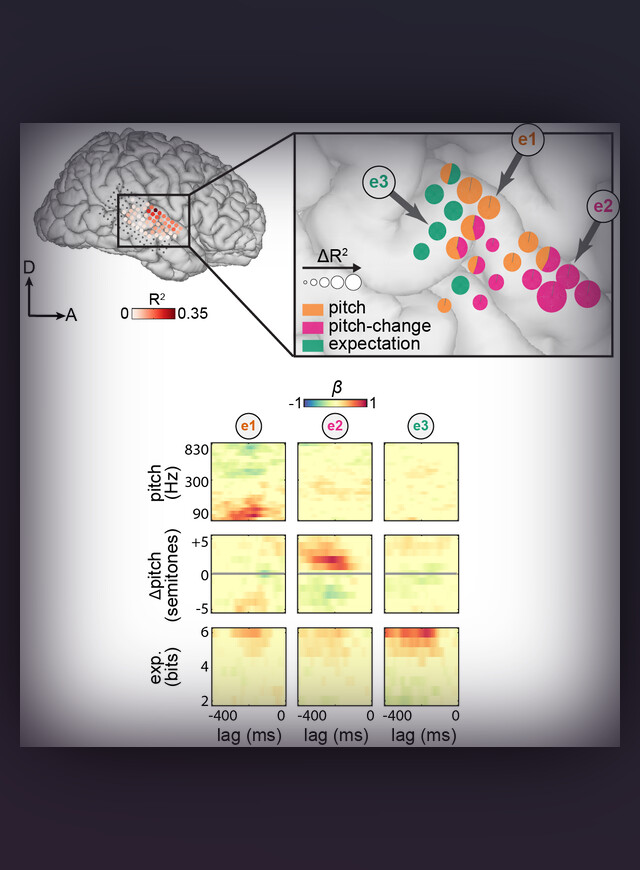
Neural encoding of melody
What information is represented in the brain when we listen to melody, and how do these representations emerge from sound striking the ear? We combine data-driven machine-learning approaches with intracranial and scalp-based EEG recordings of brain activity to answer these questions.
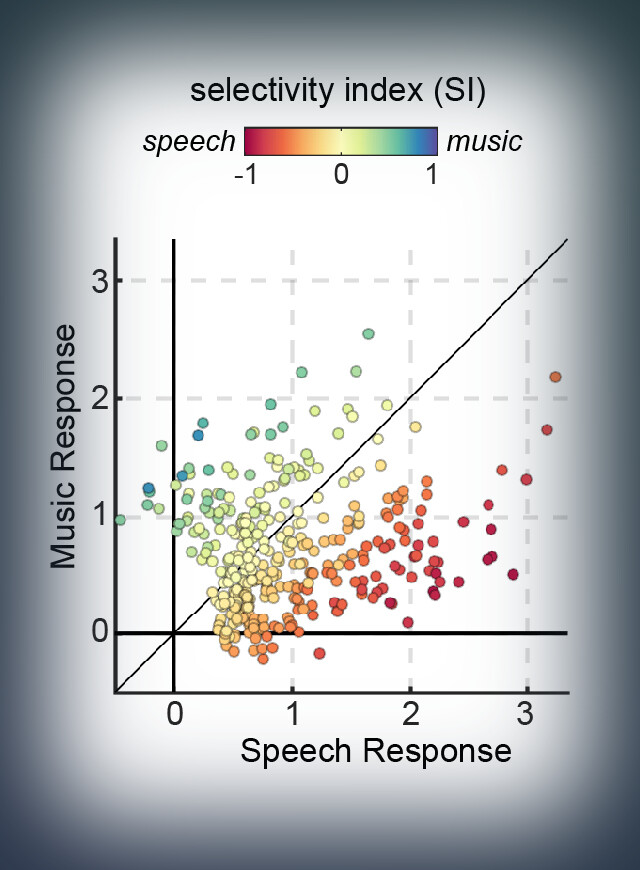
Music specializations in the human brain
When we listen to music, how much of what the brain does is specific to music alone? How much of music perception leverages general-purpose sound processing mechanisms that also serve other domains - like speech? We directly compare auditory processing across different listening domains to answer this question.

Neural encoding of sound and musical pleasure
Why does music bring some people deep pleasure while leaving others largely unmoved? We examine whether variations in music reward sensitivity can be explained by how faithfully frontotemporal circuits encode structural features of sound itself. Understanding the neural basis of musical pleasure and its individual variability may unlock the precision-use and personalization of music-based treatments.

Music processing in Disorders of Consciousness
In collaboration with the coma lab at UCSF, we examine the neural encoding of music in patients with acute disorders of consciousness (DOC) following traumatic brain injury. DOC exist on a continuum, and accurate differential diagnosis is both essential to clinical management and strongly predicts patient outcomes. However, current bedside examination is imperfect. EEG monitoring of patients has shown that 15-20% of patients diagnosed with coma on bedside examination have evidence of brain responses to motor commands, bringing into question the very definition of consciousness. Harnessing music’s power as a modulator of arousal and mood, our long-term goal is to create music-based biomarkers for improved diagnosis and prognosis across impaired states of consciousness.

Ethics of emerging neurotechnologies
We examine the societal and ethical implications of emerging neurotechnologies, such as brain-computer interfaces that decode speech from auditory, motor, or semantic representations in the cortex.